

CHALLENGE: Design and fabricate an electrochemical machine capable of drilling aluminum.
SUMMARY: I designed and fabricated a portable, single-axis electrochemical drilling machine for machining aluminum.
The system uses saltwater as an electrolyte and a controlled Z-axis feed to remove material without conventional cutting tools. The machine is made up of six major components: the containment bucket, the lid, the electrode holder, the x-axis/pump mount, the coupon fixture, and the electronics enclosure.
COURSE/CLIENT: ME4610 Adv Manufacturing Processes, Columbia University Mechanical Engineering
COMPLETION: November 2025
SKILLS: Mechanical, electrical, & chemical engineering, electrochemical machining, product design, experimental testing & data analysis
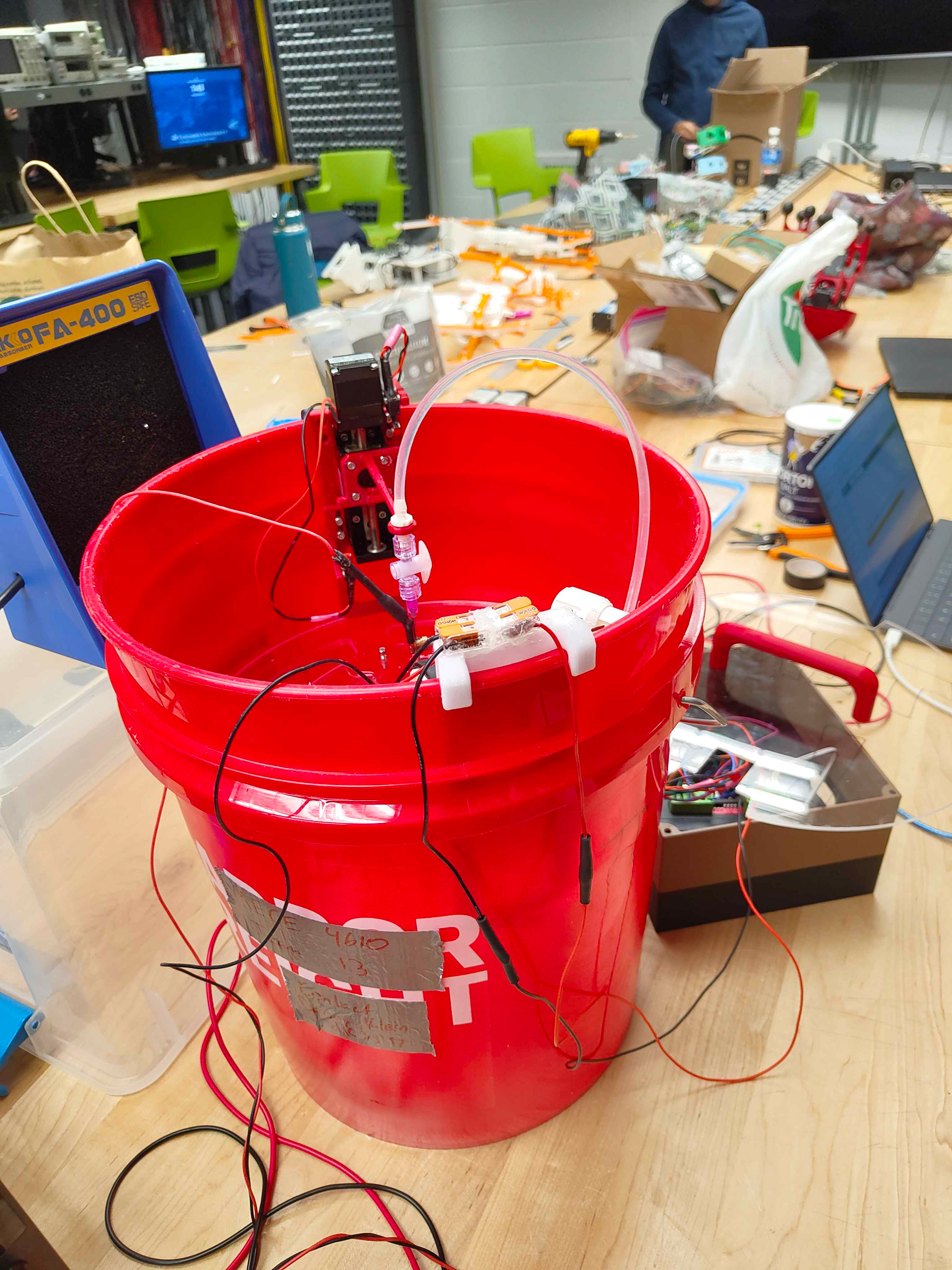
A reservoir is required to contain the electrolyte. I avoided 3D-printing or assembling a reservoir because require further post-processing for waterproofing. As such, I chose a 5-gallon bucket because it is readily available from any hardware store, cheap, portable, and stores liquids. The bucket serves as the electrolyte reservoir, structural frame, and enclosure.
The electrode tool is a stainless steel 16 gauge needle, using luer lock fittings and silicone tubing to plumb it to a 24V DC pump. Corrosion materials were selected for components in contact with the saltwater electrolyte.
The tool is driven up and down on a 3D-printed arm by a linear carriage with a stepper motor. The components latch onto the lip of the bucket with clips. To test the machine, 1/4x2x2" aluminum coupons were clamped with a 3D-printed fixture onto a laser-cut acrylic bed. A video of the machine drilling through a coupon may be seen below.
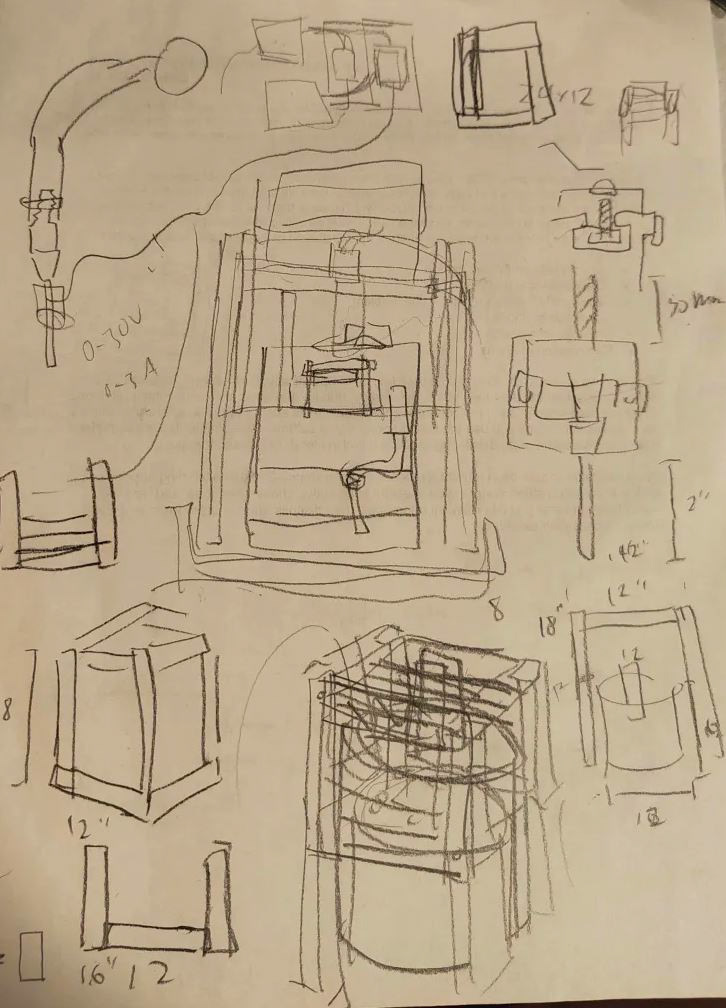
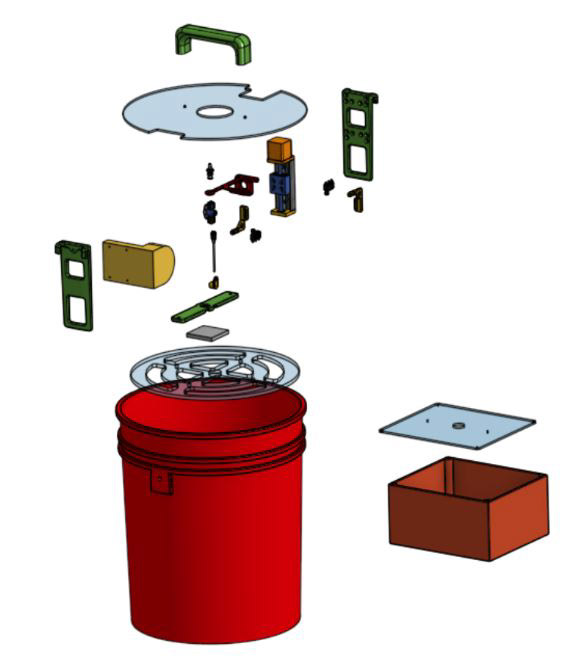
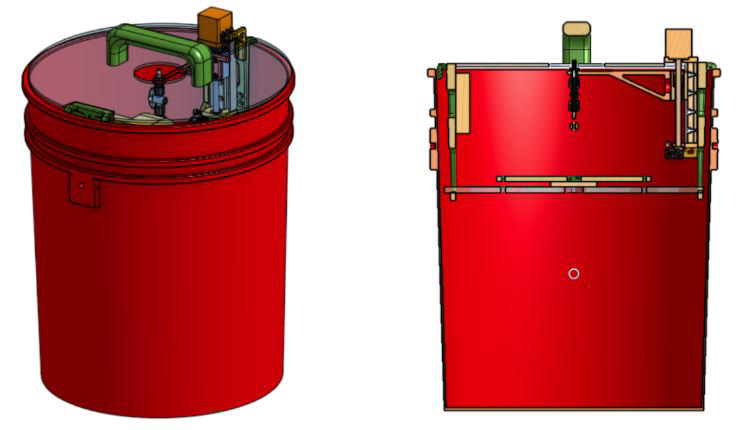
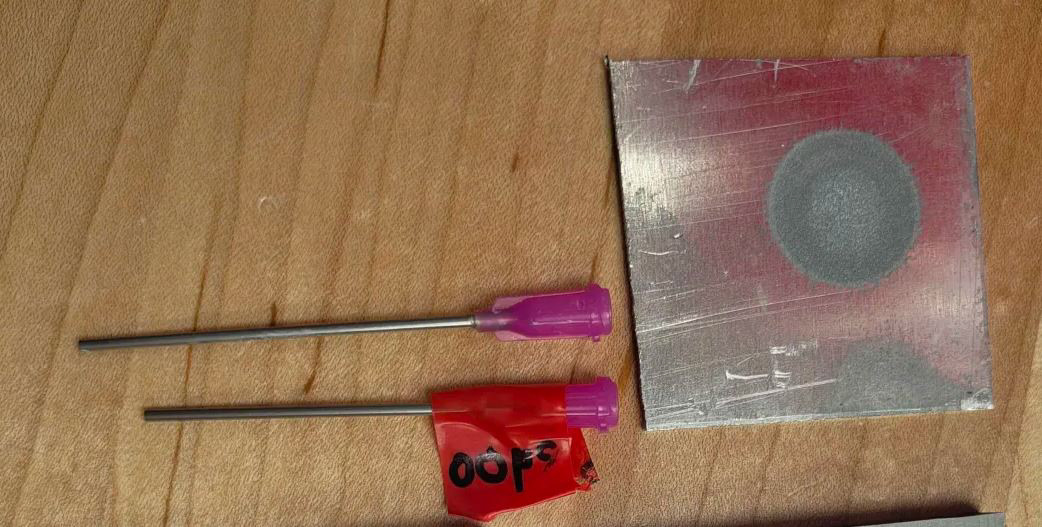
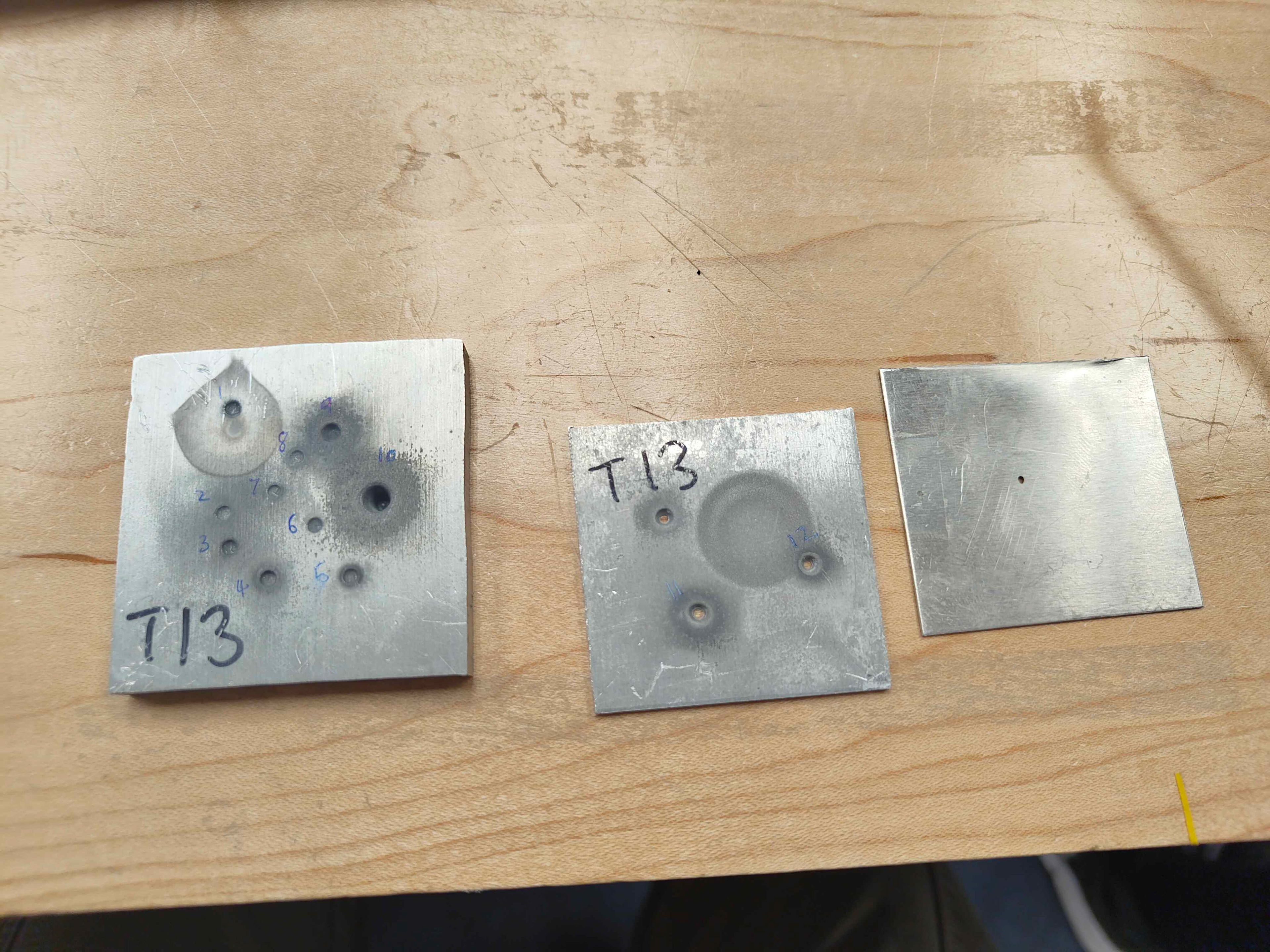
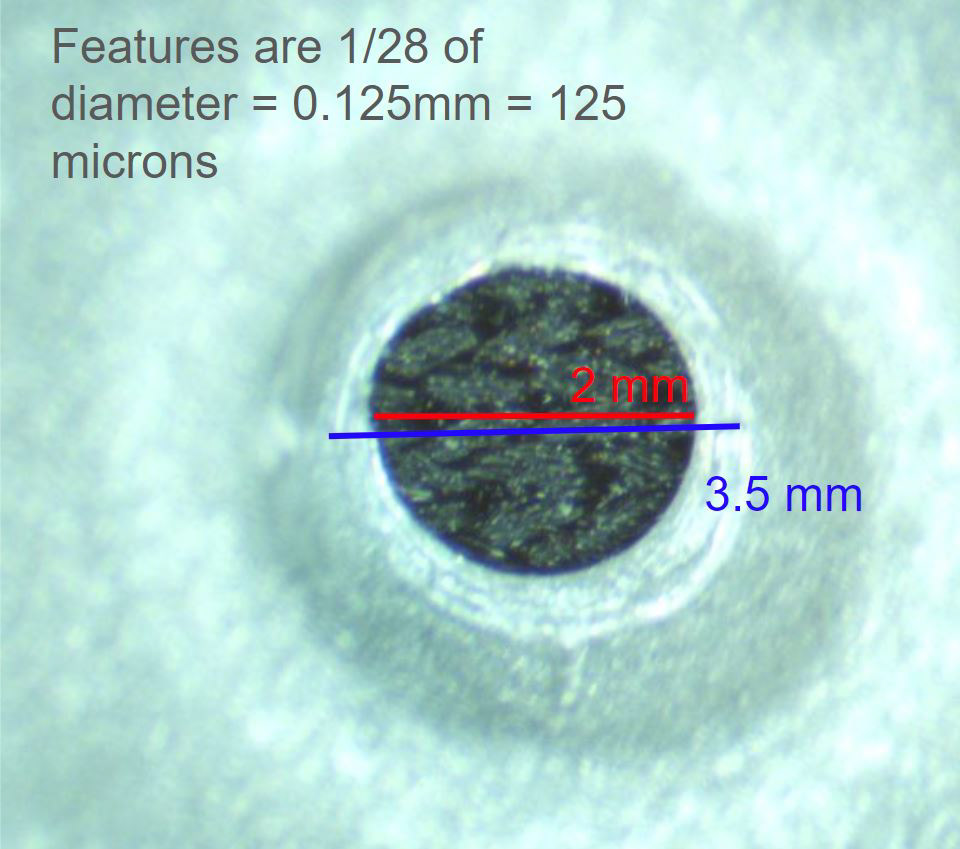
The machine was able to drill 2 mm wide through-holes in 1/8" aluminum coupons, with no leakage or spillage.
The resulting holes are tapered due to the geometry of the straight needle electrode and the variation in machining time through the thickness of the workpiece. Material near the top is exposed to the electrolysis for longer than material near the exit surface, resulting in greater material removal at the top of the hole.
Furthermore, vibrations from electrolyte flow would cause the needle to machine an non-uniform hole, and potentially short the system if the needle touched the hole walls. In future iterations, a stiffer tool should be used with more efficient drainage. Currently the system is portable, but ideally the electronics enclosure would be integrated with the bucket.